Cold Truth: How Frozen Patties Quietly Built Some of America's Greatest Burger Legacies
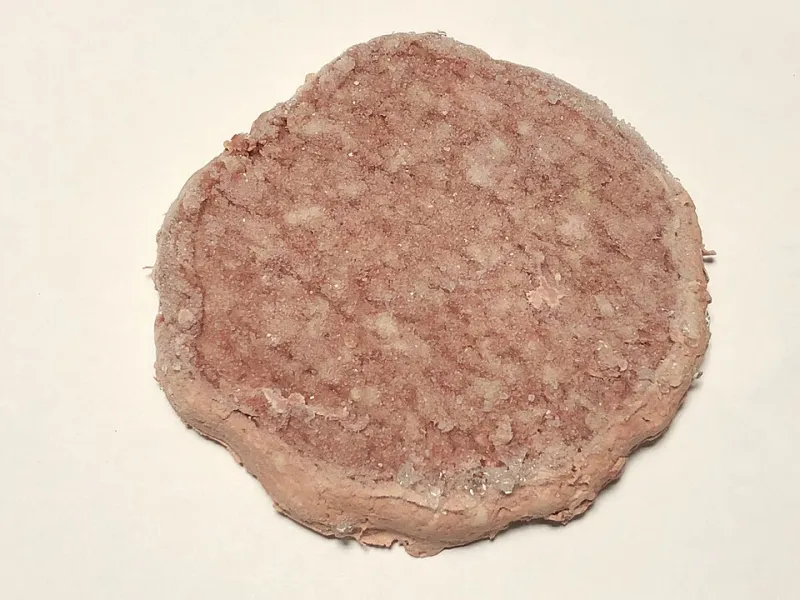
Photo: Famartin, CC BY-SA 4.0, via Wikimedia Commons
Fresh is supposed to win. That's the gospel of the modern burger world — the rallying cry printed on chalkboard menus from Brooklyn to Portland, the badge of honor worn by farm-to-table joints charging $22 for a single patty. But spend enough time digging into the history and science of America's most beloved burgers, and you'll find a freezer sitting right at the heart of the story.
This isn't a defense of sad, gray, freezer-burned hockey pucks. This is something more interesting than that.
The Legends Nobody Talks About
Let's start with a name most serious burger people already know: Steak 'n Shake. The Midwest chain, which has been slinging burgers since 1934, built its entire identity around thin, smashed patties — and for decades, those patties passed through a freezing process as part of their supply chain. Same goes for early-era Whataburger locations across Texas and the Gulf Coast. And if you want to go deeper into regional lore, old-school Oklahoma onion burger joints — the kind that put this state on the burger map long before anyone was writing trend pieces about it — often relied on pre-portioned frozen beef simply because fresh ground meat wasn't always available in smaller towns.
These places didn't become legends despite frozen beef. They became legends because they figured out how to work with it.
What Actually Happens When You Freeze Beef
Here's where it gets genuinely interesting. When beef is frozen, the water inside the muscle cells expands and forms ice crystals. Those crystals puncture cell walls. That sounds bad — and in some contexts it is — but when you're talking about a burger patty hitting a screaming-hot flat-top griddle, that cellular breakdown does something unexpected: it accelerates the Maillard reaction.
The Maillard reaction is the chemical process responsible for that deep, caramelized crust that separates a great burger from a forgettable one. When cell walls are pre-compromised, moisture releases faster during cooking, the surface of the patty dries out more quickly, and the browning begins sooner and more aggressively. The result, in the right hands, is a crust with serious character.
There's also a fat distribution argument. When fresh ground beef is handled and pressed into patties, the fat can smear and redistribute unevenly. A frozen patty holds its structure. The fat stays where it was when the patty was formed, meaning it renders more evenly during cooking. For thin smash-style burgers especially, this matters enormously.
The Uncomfortable Reckoning
Talk to enough burger obsessives and you'll eventually find someone who ran the experiment themselves — side-by-side cooks, same beef, same fat content, same griddle temperature, one fresh and one frozen. The results aren't always what they expected.
Dave Nonaka, a line cook turned burger pop-up operator in Kansas City, ran exactly this kind of test during the early days of his smashburger concept. "I was a fresh-beef absolutist," he says. "I thought freezing was lazy. Then I did the side-by-side and I had to sit with what I was seeing. The frozen patty had a better crust. I didn't want to admit it."
He now freezes a portion of his patties overnight before service. Not all of them — he's found a hybrid approach works best for his particular setup — but enough that he's no longer pretending the science doesn't exist.
That kind of pragmatism is actually the key insight here. The fresh-versus-frozen debate is largely a false binary. The real question is: what are you doing with the beef, and do you understand what the cooking process actually requires?
Where Fresh Still Wins
None of this means fresh ground beef is overrated. For thick, steakhouse-style patties cooked to medium-rare, freshly ground beef — especially coarse-ground cuts like chuck or brisket — delivers a texture and juiciness that frozen simply can't replicate. The cellular integrity of fresh beef means the interior stays tender and loose, almost steak-like in the best versions.
The smash burger format specifically is what tips the scales toward frozen. The thinner the patty and the hotter the cook, the more the freezing advantage compounds. For anything over a half-inch thick that you're planning to cook with any kind of pink left in the middle, fresh is still your friend.
Rethinking the Hierarchy
What the frozen patty conversation really forces is a more honest look at how we evaluate burger quality. "Fresh" has become a marketing shorthand for "better," and that's not always accurate. A fresh patty handled carelessly — overworked, pressed repeatedly, cooked on a grill that isn't hot enough — will lose to a properly frozen patty on a well-seasoned griddle every single time.
The variables that actually move the needle: fat content (80/20 is still the sweet spot for most applications), grind coarseness, cooking surface temperature, seasoning timing, and flip frequency. Whether the beef was frozen is one factor among many, and it's not automatically the decisive one.
America's burger culture has spent the last decade in a fresh-everything frenzy, and there's been real good that came from it — better sourcing, more transparency, more interesting beef blends. But somewhere along the way, "fresh" became a stand-in for technique, and that's where things went sideways.
The joints that built their reputations on frozen beef knew something the current moment is still catching up to: a great burger is about understanding your ingredients and your process, not just checking a box on the menu.
The freezer isn't the enemy. It never was.