Off-Menu and Completely Worth It: The Secret Burger Orders Regulars Never Talk About
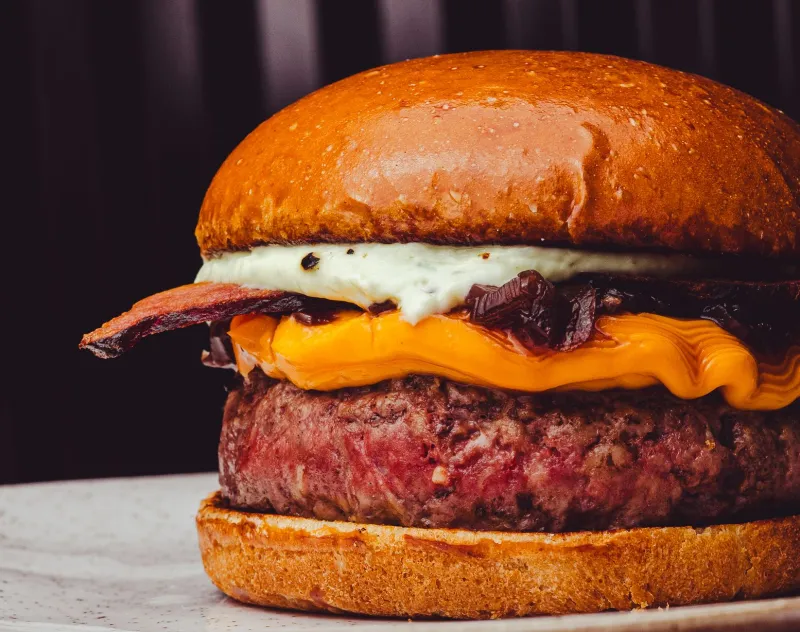
At a certain burger counter in Kansas City, there's an order called "the Tuesday." Nobody on staff can explain where the name came from. It has nothing to do with the day of the week. It's a double patty, cooked extra-crispy on the edges, with American cheese added twice during the melt process, a smear of yellow mustard under the bottom bun, and pickles on the bottom instead of the top. The kitchen knows it. The regulars know it. It's not on any menu anywhere.
Ask the counter staff about it and they'll either confirm it with a nod or look at you blankly depending on how long they've been working there. That ambiguity is, weirdly, part of the appeal.
This is the world of underground burger customizations—the oral tradition of devoted regulars who've spent enough time at a single spot to develop opinions about things the menu doesn't even acknowledge. It's a world that's more widespread than most casual eaters realize, and more interesting than the "secret menu" hype machine usually gives it credit for.
How These Orders Actually Come to Exist
The mythology around secret menus often involves a charismatic regular who sweet-talked a cook into making something special, and that story gets passed down until it becomes lore. Sometimes that's accurate. More often, the reality is less cinematic.
Most underground orders emerge from one of three sources: a happy accident, a persistent regular, or a former menu item that got discontinued but that the kitchen can still technically produce.
The happy accident version is exactly what it sounds like—someone asked for something weird once, it turned out to be great, and word spread. The persistent regular version involves someone who kept asking for a specific modification until the staff just started knowing their order. And the discontinued-item version is probably the most common: a restaurant drops something from the menu for operational reasons, but the ingredients are all still there, and regulars who loved it just keep ordering it anyway.
"We took a green chile option off our menu three years ago because the supplier situation got complicated," says a line cook at a New Mexico burger spot who asked not to be identified. "We still get probably ten orders a week for it. We make it. We just don't advertise it anymore."
The Orders That Keep Coming Up
We talked to regulars at burger joints across the country and collected a catalog of underground modifications. A few patterns emerged.
The Double-Cheese Timing Trick: At multiple spots, regulars have figured out that asking for cheese added in two separate stages—once early in the cook and once right before service—produces a fundamentally different melt than standard single-application cheese. The first layer gets integrated into the crust. The second layer stays glossy and soft. People who know this trick swear it's the difference between a good cheeseburger and a great one. It's not on any menu anywhere, but kitchen staff at smash burger spots in particular tend to be familiar with it.
The Undersauce: At a handful of regional spots, regulars have developed a practice of asking for their sauce under the bottom bun rather than on top of the patty. The logic is structural—the bun absorbs the sauce instead of the patty's crust, which preserves the sear. Whether this actually improves the burger is genuinely debatable, but the people who do it are extremely committed.
The Lettuce Wrap Flip: Not the standard lettuce-instead-of-bun move, but something more specific: using a large outer leaf of iceberg as a structural bottom layer beneath the bun to prevent sogginess on builds with a lot of toppings. Several regulars at high-topping-count burger spots mentioned this independently, suggesting it's been discovered and rediscovered multiple times at different places.
The Animal-Style Adjacent: In-N-Out's Animal Style is the most famous example of an underground order going mainstream, but most serious regional burger spots have their own version—a combination of modifications that the kitchen recognizes as a single unit, usually with a name that only makes sense to the people who've been ordering it long enough.
Are These Actually Better, or Just Ritualistic?
This is the question that splits burger people right down the middle. One camp argues that hyper-specific customizations represent genuine culinary insight—that regulars who've eaten somewhere dozens of times have developed a real understanding of how to optimize the build. The other camp suspects that most of these modifications are elaborate placebo effects dressed up in insider-knowledge clothing.
Honestly? Both camps have a point.
Some underground orders are real improvements. The double-cheese timing thing, for instance, has a legitimate technical basis. Asking for your bun toasted longer than standard is a simple, effective upgrade that most kitchens are happy to accommodate and that genuinely improves the structural integrity of the burger.
Other modifications are harder to defend on purely culinary grounds. The undersauce move, for example, probably doesn't produce a meaningfully better burger for most people. But it produces a burger that feels more intentional, more considered—and there's something to be said for that. Eating is not a purely mechanical act. Ritual matters. The sense that you're doing something specific and deliberate changes the experience even if it doesn't change the food.
The Communication Problem
One of the more interesting aspects of underground burger orders is how they get transmitted. Unlike online menus or food apps, these customizations exist entirely in conversation. They spread the way local knowledge always has—through regulars mentioning them to friends, through new employees learning from veterans, through the occasional forum post that gets buried but not forgotten.
This transmission method has a natural filter built into it. You have to actually care enough to seek out the information, or to be the kind of person who has regular conversations with other people who care about burgers. The underground order is, in a sense, a membership credential. Knowing it signals that you're a serious person at this particular spot.
"When someone comes in and orders the way our regulars order, we notice," says a counter worker at a long-running Chicago burger spot. "It tells us something about them."
Should You Try It?
If you're visiting a burger spot for the first time, ordering off the underground menu is almost certainly a mistake. You don't have the baseline yet. You don't know what the standard burger tastes like, so you can't evaluate whether the modification is actually an improvement.
But if you've been going somewhere long enough to have a usual order, it's worth asking. Not in a demanding way—not as if the kitchen owes you access to some secret tier of the menu—but conversationally. Ask what the regulars do. Ask if there's anything the staff particularly likes. You might get a blank stare. You might also get the best burger you've had at a place you thought you already knew.
The Tuesday isn't on the menu. But if you know to ask for it, Kansas City will treat you right.