160°F Is a Suggestion, Not a Religion: The Real Story Behind Burger Temperatures
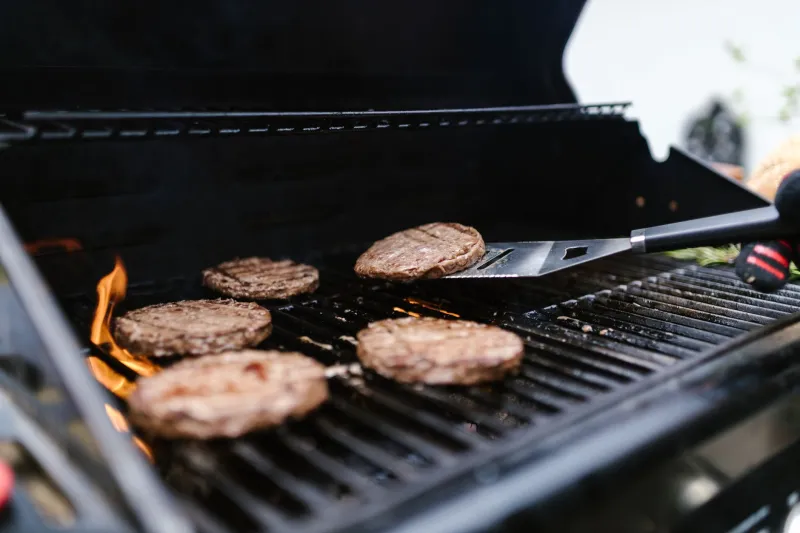
Every home cook has been there. You've got a beautiful half-pound patty sitting on the grill, fat sizzling at the edges, a perfect crust forming on the bottom. You slide in the thermometer, wait for the beep, and it reads 145°F. The USDA says you need 160°F. So you leave it on the heat a little longer. You pull it at 162°F, feel responsible and safe, and bite into something that tastes like a hockey puck wrapped in regret.
Here's the uncomfortable truth: the USDA guideline for ground beef is real, it exists for legitimate reasons, and it also tells an incomplete story about what's actually happening inside your burger. Understanding the gap between those two things is the difference between a burger that's safe and delicious versus one that's merely compliant.
Why 160°F Exists in the First Place
The USDA's recommendation isn't arbitrary. Ground beef presents a unique bacterial risk compared to whole cuts of steak. When you grind meat, surface bacteria — including dangerous strains of E. coli like O157:H7 — get mixed throughout the entire patty. With a steak, the outside gets seared and bacteria on the surface are destroyed quickly. With a burger, those same bacteria are now embedded in the interior, which means the center of the patty needs to hit a temperature high enough to neutralize them.
That number, according to food safety science, is 160°F. At that temperature, E. coli is effectively eliminated without requiring extended cooking time. It's a practical threshold built for the widest possible range of grinding conditions, equipment, and meat sources — essentially a worst-case-scenario standard designed to protect everyone.
The problem is that "everyone" includes a lot of variables that the guideline doesn't account for.
The Thermometer Doesn't Know Your Burger
Here's where things get genuinely interesting. A meat thermometer measures temperature at a single point in space. It doesn't know how thick your patty is, what fat percentage you're working with, how the grind was handled, or whether you're cooking on cast iron versus a charcoal grill. All of those factors dramatically influence how heat moves through a burger — and they're completely invisible to your probe.
Take fat content. A burger with 20% fat content conducts heat differently than an 80/20 blend versus a leaner 90/10 patty. Fat doesn't conduct heat as efficiently as protein and water, which means a fattier burger can register 160°F at the probe point while the surrounding meat hasn't fully equilibrated. You're technically hitting the number, but you're not necessarily achieving uniform safety — or uniform doneness.
Patty thickness adds another layer of complexity. A smash burger that's been pressed to about a quarter-inch thick reaches safe internal temperatures almost instantaneously once it hits a hot surface. The geometry practically eliminates any meaningful temperature gradient. A thick, loosely packed pub-style burger behaves like an entirely different food — heat moves slowly toward the center, and by the time the core hits 160°F, the outer layers have been cooking for significantly longer.
Then there's the grind itself. Fresh-ground beef from a butcher who grinds in small batches with clean equipment carries a fundamentally different risk profile than pre-packaged ground beef that may have been processed through large-scale industrial equipment and blended from multiple sources. Both are regulated, both can be safe — but they're not identical situations, and treating them as if they are is an oversimplification.
What Restaurants Actually Do
If you've ever ordered a medium burger at a good restaurant and received something with a pink center, you've witnessed this paradox in action. Many restaurants — especially higher-end spots and dedicated burger joints — serve burgers at internal temperatures below 160°F as a matter of standard practice.
Some of them do this by grinding in-house, which allows them to control the entire chain of custody for the meat. When a restaurant grinds fresh beef daily from whole cuts they've sourced directly, the bacterial contamination risk is considerably lower than with pre-ground product. Several states have regulatory frameworks that acknowledge this distinction and allow restaurants to serve ground beef at lower temperatures when specific sourcing and handling protocols are followed.
Other restaurants simply accept the risk as a business calculation, betting (usually correctly) that their sourcing standards are high enough to make the odds acceptable. This isn't something we're endorsing — it's just the reality of what's happening in kitchens across the country.
The point isn't that food safety rules are wrong. It's that the rules are written for a generalized scenario, and the actual risk landscape is more nuanced than a single temperature number conveys.
Where Your Instincts Actually Come In
Experienced cooks develop a feel for doneness that goes beyond thermometer readings, and there's real substance behind that instinct. The firmness of a patty under a gentle press, the way steam is escaping from the sides, the color and behavior of the juices pooling on the surface — these are all legitimate signals that experienced hands learn to read accurately.
None of this replaces understanding what's happening at the food safety level. But it does mean that a seasoned cook who's dialed into their equipment, knows their meat source, and understands their patty geometry is working with more information than someone who's just staring at a thermometer readout.
For home cooks, the practical guidance shakes out like this: if you're using store-bought ground beef, hitting 160°F is the right call, full stop. The risk profile of mass-ground beef justifies the caution, and a well-seasoned, properly rested burger at 160°F doesn't have to be dry if you're working with adequate fat content and not overcooking the exterior while chasing the internal number.
If you're grinding your own beef from whole cuts you've sourced carefully, or buying from a butcher who does the same, you have more flexibility — and the latitude to cook to personal preference with a clearer conscience.
The Carry-Over Problem Nobody Talks About
One more variable that makes the 160°F target trickier than it looks: carryover cooking. A burger pulled off the heat at 155°F can easily coast to 160°F or beyond as it rests, depending on its thickness and the residual heat in the patty. If you're religiously targeting 160°F at the grill and not accounting for carryover, you're probably consistently overshooting your actual target — which explains a lot of dry, overcooked burgers in safety-conscious households.
Pull slightly earlier, rest your burger for a minute or two, and let the temperature equalize. It's a small adjustment with a noticeable impact on the final result.
The Bottom Line
The USDA guideline isn't a lie, and your thermometer isn't useless. But neither one is the complete picture. Great burger cooking means understanding why the temperature target exists, what factors in your specific situation affect how relevant it is, and how to work within that knowledge to produce something that's both safe and worth eating.
A burger that's technically compliant but tastes like cardboard isn't a win. Neither is a burger that tastes great but came from a situation where the risk wasn't properly understood. The goal is both — and getting there requires more than just a number.