From Grill to Table: The Ticking Clock That Determines Whether Your Burger Is Great or Just Fine
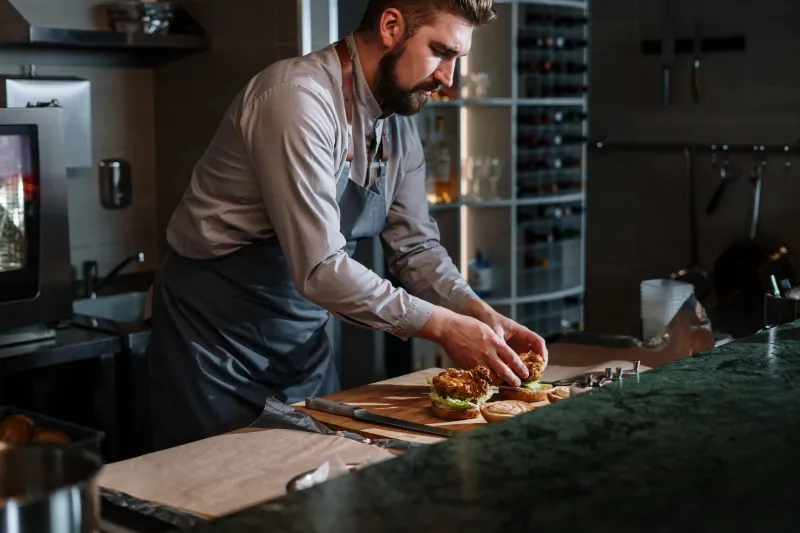
Ask most people what separates a great burger from a mediocre one and you'll get answers about beef quality, fat content, seasoning, or the char on the crust. All of those things matter. None of them matter as much as what happens in the five minutes after the patty leaves the heat source.
This is the part of burger-making that doesn't get talked about enough—not in recipe content, not in cooking shows, and not in most restaurant kitchens that haven't specifically trained their line cooks to care about it. The gap between cooking and serving is where burgers go to die. And the places that have figured out how to manage it are producing something categorically different from everyone else.
Why Timing Is the Variable Nobody Controls
Heat is easy to understand. You know when the grill is hot. You know (roughly) how long a patty needs on each side. You can see the crust forming, smell the fat rendering, watch the edges gray out as the cook progresses from the bottom up. All of that is visible and learnable.
What happens after the patty comes off the heat is harder to see and much harder to control, especially in a busy kitchen. The patty continues to cook internally for a short period—carryover heat is real and meaningful, particularly in thicker formats. Moisture that was driven toward the center of the patty during cooking starts redistributing toward the edges. The crust, which was crackling and perfect thirty seconds ago, begins absorbing ambient steam and softening.
Simultaneously, the bun is either getting toasted or it isn't. The cheese is either melting properly or it's sitting on top of a warm patty doing nothing useful. The condiments are either being applied in the right order for structural integrity or they're being slapped on in whatever sequence is fastest.
All of this is happening at once, and every single element has a window of maybe two to four minutes where it's at its best. Miss that window and you haven't ruined the burger—but you've made it noticeably worse than it could have been.
The Resting Myth and the Resting Reality
Anyone who's cooked a steak has heard about resting meat. The principle is real: letting a cooked protein sit before cutting allows the muscle fibers to relax and moisture to redistribute, resulting in a juicier final product.
Burgers are more complicated. A thin smash patty has almost no interior moisture to redistribute—it's cooked through by design, and the appeal is the crust and the cheese melt, not the interior juiciness. Resting a smash patty for three minutes while you assemble the rest of the burger is actively counterproductive. The crust softens. The cheese, which melted perfectly on the grill, starts to congeal.
A thicker patty—something in the six-to-eight ounce range cooked to medium—benefits from a very brief rest, maybe sixty to ninety seconds. Long enough for the internal temperature to stabilize, short enough that the crust doesn't lose its texture.
The best burger kitchens have worked this out through repetition and attention. They know exactly how long their specific patty format benefits from resting, and they've built that timing into the assembly sequence so it happens automatically, not as a separate conscious step.
The Bun Is on a Different Clock
Here's something that professional burger kitchens know that most home cooks don't: the bun and the patty have different optimal windows, and they need to be synchronized.
A properly toasted bun has a window of maybe ninety seconds where it's at peak texture—warm, slightly crispy on the cut face, soft on the exterior. After that, the moisture from the steam table or the ambient kitchen humidity starts working on it. The cut face loses its crispness. The exterior can get slightly rubbery if there's any direct heat nearby.
The patty, depending on format, has its own window. Getting both elements to peak condition at the same moment, every time, during a dinner rush when the kitchen is firing fifteen tickets simultaneously, is genuinely hard. It requires either excellent timing intuition from experienced line cooks or a systemized approach where the sequence is locked in.
The spots that get this right—and you can taste it when they do—have usually drilled the sequence until it's muscle memory. Bun goes on the toaster at a specific point in the patty's cook time. Cheese goes on at a specific point. Assembly starts at a specific point. Nothing waits for anything else longer than it has to.
Temperature Retention and the Assembly Stack
The order in which a burger gets assembled isn't just about aesthetics or structural stability—it's about temperature management.
Condiments go on the bun, not the patty, for a reason. Cold mayo or mustard applied directly to a hot patty pulls heat out of the meat and can create a temperature gradient that makes the center of the patty feel cool by the time it reaches the customer. Applied to the bun, those condiments act as a partial insulator between the bread and the patty, slowing heat transfer in a more controlled way.
Lettuce, if it's being used, goes between the condiment and the patty—never directly on the patty—for the same reason. Tomato slices, which carry significant moisture, go on the opposite side from where the patty will sit, reducing the chance of that moisture softening the toasted bun surface before the burger is eaten.
None of this is arbitrary. It's been worked out empirically by kitchens that noticed their burgers arriving at tables in better or worse condition depending on how they were built.
The Carry Window: From Assembly to Hands
The final piece of the puzzle is transit time—how long the burger sits between completion and consumption. In a restaurant, this is the time between the pass and the table. At home, it's the time between plating and sitting down.
A properly assembled burger is at its best within about ninety seconds of completion. After that, the bun begins absorbing moisture from the patty and condiments. The crust on a smash burger starts to lose definition. The cheese, if it wasn't perfectly melted, starts to either congeal or slide.
The restaurants that take this seriously—and they exist, in every major city and in enough small towns to give you hope—treat the carry window as part of the cooking process. Runners are trained to move quickly not because the kitchen wants to turn tables, but because the food is genuinely better when it arrives fast.
This is the part of burger-making that's almost impossible to teach through a recipe. It has to be experienced, tasted, and internalized. But once you've had a burger that was served inside its optimal window, you can taste the difference—and you'll notice every time a burger arrives slightly outside it.