The Weird Burger Orders That Are Actually Outselling the Classics
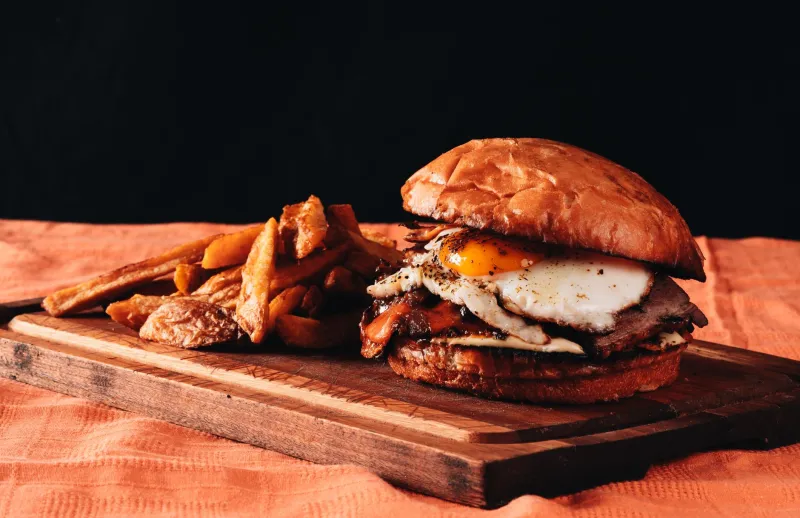
There's a burger on a menu somewhere in Columbus, Ohio—a smash patty buried under a runny fried egg, a smear of gochujang mayo, and a fistful of crispy fried shallots—that the owner almost didn't put on the menu. He thought it was too weird. Too far from what people expected when they walked through the door. He added it as a one-off weekend special and hasn't been able to take it off since. It outsells his classic cheeseburger two-to-one on Friday nights.
This story is not unusual. Across the country, menus are being quietly rewritten by orders that nobody in the building thought would stick. The regional wildcard burger—the one that breaks every rule, combines ingredients that have no business being together, and somehow becomes the thing your regulars won't shut up about—is having a genuine moment. And understanding why tells you a lot about where American burger culture is actually headed.
The Classic Cheeseburger Isn't Going Anywhere, But It Has Competition
Let's be clear about something: the double cheeseburger with American cheese, pickles, and special sauce is not in danger. It will never be in danger. But its stranglehold on the top of the sales chart at independent burger joints? That's loosening, and it's loosening fast.
Operators who track their sales closely are noticing something interesting. The burgers they assumed would be novelties—the ones that required an extra sentence of explanation from servers, the ones that made first-timers pause before ordering—are climbing. Not just in coastal cities where adventurous eating is part of the identity, but in places like Tulsa, Omaha, and Chattanooga.
The driving force isn't trendiness. It's familiarity with a twist. The fried egg topping, for instance, has been on diner plates in the Midwest for generations. Putting it on a smash burger doesn't feel radical to someone who grew up eating a breakfast sandwich at a truck stop on Route 30. It feels like home, just upgraded.
What's Actually Selling, and Where
Break it down regionally and the picture gets even more interesting.
The Midwest is doing things with eggs and pickled vegetables that would have seemed bizarre on a burger menu a decade ago. Quick-pickled jalapeños, soft-cooked eggs with broken yolks, and fermented mustards are showing up on burgers in cities like Kansas City and Indianapolis—and they're not just selling to the foodie crowd. Line cooks and warehouse workers are ordering them on lunch breaks.
The Gulf Coast has always played by its own rules, but the integration of Gulf seafood into burger formats has accelerated significantly. Shrimp remoulade as a burger topping in New Orleans is practically old news at this point. What's newer is the fried oyster burger showing up in Mississippi and Alabama spots that previously wouldn't have touched anything that didn't moo. These aren't gimmicks—they're responses to what local customers actually want.
The Pacific Northwest has been doing the seafood-adjacent burger thing for a while, but the execution has gotten sharper. Dungeness crab topping a beef patty sounds like it belongs on a hotel restaurant menu. At a handful of independent spots in Portland and Seattle, it's become a legitimately beloved regular item that people drive across town for.
The Southwest is leaning into green chile with a commitment that borders on religious. The Hatch green chile cheeseburger isn't new—New Mexico has been arguing about who makes it best for decades—but the format is spreading into Arizona and Colorado in ways that feel organic rather than appropriated.
Why the Wildcard Wins
There are a few things working in favor of the unexpected burger.
First, social media has completely changed the calculus of ordering. People aren't just eating—they're documenting. A classic double cheeseburger is delicious, but it doesn't photograph differently than the one someone had last week at a different place. A burger with a jammy egg and a bright orange sauce that drips down the side of a glossy bun? That's a post. That's a share. That's ten new customers who saw it in their feed and made a reservation.
Second, trust in independent operators has grown. When a small burger joint puts something weird on the menu, a significant portion of their customer base assumes there's a reason for it. That the chef has thought it through. That it's going to be good. That dynamic didn't always exist—it's a product of the food media ecosystem, of people following the cooks they love on Instagram, of the broader cultural shift toward treating independent restaurants as destinations worth engaging with.
Third, and maybe most importantly, American palates have genuinely evolved. The explosion of global cuisine availability across the country—Korean, Vietnamese, West African, Mexican regional cooking—has given a huge swath of the population a much wider flavor vocabulary. Gochujang isn't exotic to a 28-year-old in Cincinnati who grew up going to Korean barbecue with her family. It's just a condiment she likes.
What This Means for Menus Going Forward
The operators who are paying attention are drawing some careful conclusions. The wildcard burger can't be arbitrary. It has to make sense within a regional context, use ingredients that locals have some existing relationship with, and deliver on the promise of the combination. A fried egg topping works in the Midwest because it connects to a breakfast tradition people grew up with. A truffle aioli burger doesn't work in the same market because it's trying to impress rather than satisfy.
The other lesson is about confidence. The Columbus owner who almost didn't put his egg burger on the menu almost made a significant mistake. The operators who are winning with regional wildcards are the ones who trusted their instincts, knew their customers, and committed to the bit fully—proper execution, proper promotion, no hedging.
The classic cheeseburger remains the bedrock. But the most interesting thing happening in American burger culture right now is happening just to the left of it on the menu, in the items you'd never think to order—until you do, and then you can't stop.