You Already Know What You're Getting: The Psychology Behind America's Most Committed Burger Orders
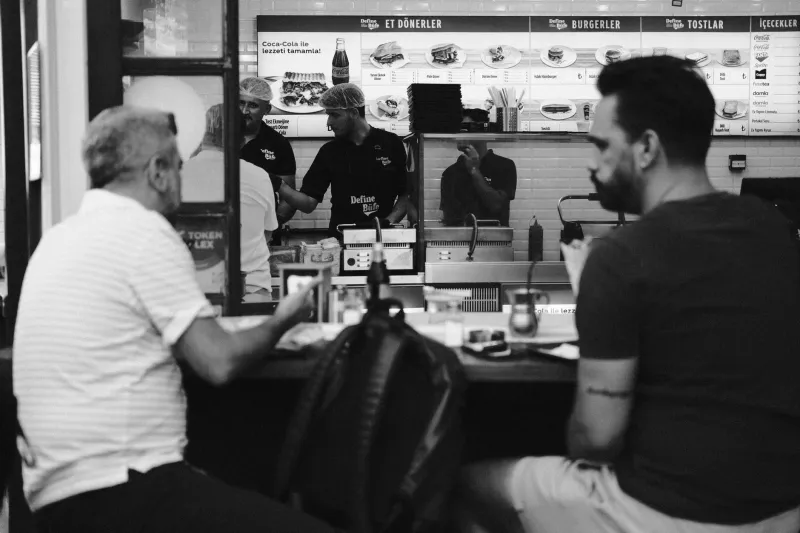
There's a guy at a smashburger spot in Columbus, Ohio, who has ordered the exact same thing every single visit for eleven years. Double patty, American cheese, grilled onions, mustard only, toasted bun—but not too toasted. He says it fast, in one breath, like a phone number he memorized in high school. The counter staff doesn't even write it down anymore.
He's not unusual. He's actually pretty representative of something that happens quietly at burger joints all across the country: the development of what regulars and restaurant folks have started calling "the script."
What the Script Actually Is
The burger ordering script is exactly what it sounds like. It's the specific, rehearsed sequence of words a customer has refined over dozens or hundreds of visits to communicate exactly what they want—quickly, accurately, and without ambiguity. It usually includes a base order, modifications, and a handful of clarifications that prevent the one thing every regular dreads: getting the wrong burger.
For some people, the script is short. "Number two, no pickles, add jalapeños." For others, it's a paragraph. A regular at a beloved independent joint in Austin told us her full order takes about forty-five seconds to recite and includes specific instructions about how her patty should be cooked, which sauce goes on which half of the bun, and a reminder that she wants extra napkins before she even sits down.
"I know it sounds high-maintenance," she laughed. "But I've been coming here for eight years. I've earned this."
That sense of earned authority is a big part of what drives the script. Regulars aren't just ordering food—they're asserting a kind of membership.
The Relationship Between Regulars and Staff
From the restaurant side, the script creates something genuinely valuable. Owners and managers at independent burger spots will tell you that a customer who knows exactly what they want is easier to serve, faster to turn over, and more likely to be satisfied. But beyond the operational benefits, there's something more interesting happening.
Mike Delaney, who has run a counter-service burger spot in Pittsburgh for over fifteen years, describes his most loyal customers as co-authors of the menu. "Some of these people have been ordering variations that don't technically exist on our menu for years," he said. "At some point, we just started making sure we had everything they needed to make it happen. It's a conversation that's been going on for a decade."
That back-and-forth—customer refines the order, kitchen adapts, customer refines again—is how a lot of the best off-menu items get born. The script isn't just a transaction. It's a long-running negotiation.
And the staff who can recite a regular's order back before the customer finishes speaking? That's a form of hospitality that no app, kiosk, or loyalty program has ever successfully replicated.
When the Script Becomes Performance
Here's where it gets complicated. For every genuine regular whose script represents years of taste refinement, there's someone who's adopted the posture of a regular without really putting in the time. The ordering script has, for some people, become a kind of social signal—a way of communicating "I'm a person who knows things about burgers" rather than a genuine expression of preference.
You've probably seen this. Someone walks into a well-known burger spot, rattles off a complicated order with a lot of confident specificity, and then seems vaguely disappointed when the result is just... a burger. The performance was the point, not the food.
Food psychologists have a term adjacent to this: ritualized consumption. The ritual surrounding the food takes on meaning that the food itself can't always deliver. The script becomes the experience, and the burger is almost secondary.
That's not entirely a bad thing—ritual and meaning are legitimate parts of why we eat where we eat. But it does raise a question worth sitting with: is your order actually dialed in because it's perfect for you, or because you've told the story of your order so many times that changing it would feel like a personal loss?
The Customization Economy
The rise of the script is also partly a product of how burger culture has evolved over the last two decades. The explosion of build-your-own options, premium topping bars, and sauce menus has given customers an almost overwhelming amount of surface area to customize. And with that freedom comes the pressure—real or imagined—to have an opinion about all of it.
When a menu offers twelve cheeses, eight sauces, and a topping list that runs to twenty items, ordering a plain cheeseburger can feel almost like a statement. The script is, in part, a way of navigating that complexity without having to re-evaluate every time.
Interestingly, some of the most devoted regulars at minimalist burger joints—places with three or four items on the menu and no modifications accepted—still develop scripts. They're just shorter. "The usual" at a no-frills counter is its own kind of script, and the relationship it represents with the people behind the counter is often even tighter.
What Your Script Says About You
At the end of the day, the burger ordering script is a small but genuinely revealing window into how Americans form attachments to places. The specificity of a regular's order reflects not just taste preferences but accumulated visits, conversations with staff, small disappointments and happy accidents, and the slow process of a place becoming yours.
The guy in Columbus with his eleven-year double patty order? He told us he moved away for three years for work. When he came back, he walked in, said his order, and the person behind the counter—someone who'd been hired while he was gone—looked it up in the system and said, "Oh, you're back."
They'd kept his order on file.
That's not just a burger transaction. That's a relationship. And the script is how it stays alive.