One Location Was Lightning in a Bottle. The Rest Were Just Bottles.
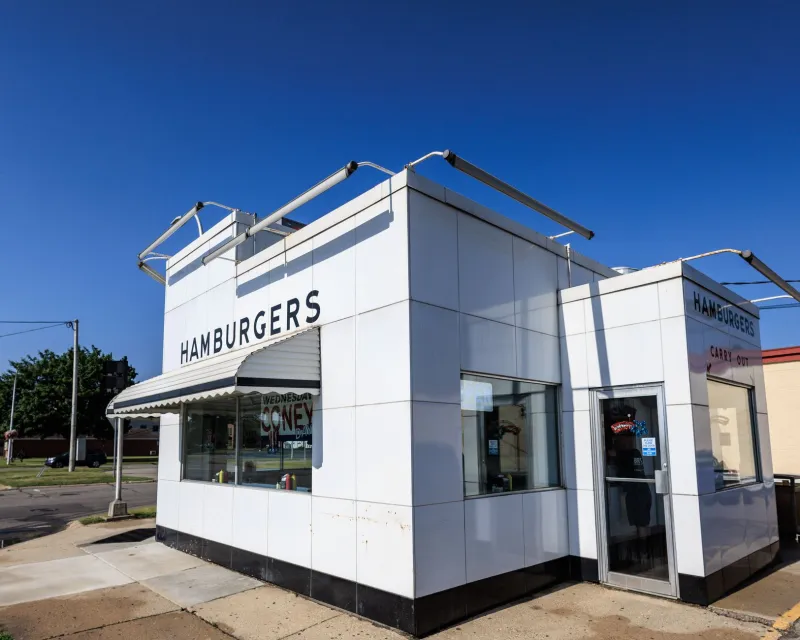
There's a burger joint somewhere in your state that people drive past three newer, shinier places to get to. The parking lot is always a little too small. The menu hasn't changed since the Clinton administration. And the burger — the specific burger from that specific location — is something you'd genuinely describe to a stranger at a party.
Then they opened a second location. Maybe a third. And somewhere along the way, the thing that made the original so good quietly disappeared, leaving behind a burger that's technically correct but spiritually empty.
This isn't a coincidence. It's a pattern, and it plays out across American burger culture with almost mechanical regularity.
The Myth That a Recipe Is Enough
When operators decide to expand, the instinct is to document everything. Write down the recipe. Train the staff. Source the same ingredients. Build the same line. It sounds like a reasonable plan, and on paper, it is.
The problem is that the original location's greatness was never just about the recipe.
Talk to anyone who's worked in a kitchen for more than a few years and they'll tell you the same thing: a recipe is a skeleton. What puts meat on the bones is muscle memory, intuition, and the kind of low-level obsession that develops when one person has been making the same burger for fifteen years. The cook at the flagship who's been smashing patties on that specific flat-top since 2009 isn't following a laminated card anymore. They're feeling it. That's not something you can franchise.
Mike Stellino, who spent eight years managing a beloved smash burger operation in the mid-Atlantic before helping open two satellite locations, put it plainly: "We thought we were selling a burger. Turns out we were selling the guy making the burger. The moment he wasn't there, the product started drifting, and we didn't even notice it at first because it was so gradual."
Supply Chain Is Where Dreams Go to Die
Ingredients are the other place where expansion quietly kills quality, and it happens faster than most operators expect.
The original location of a beloved regional chain often sources hyper-locally — a specific beef blend from a butcher two towns over, a bun from a bakery that only does wholesale to three accounts, a particular cheese that a dairy rep started dropping off years ago as a favor. These relationships are built on handshakes and history. They don't scale.
When a second location opens forty miles away, suddenly the logistics don't work anymore. The bakery can't deliver that far. The butcher doesn't have the volume. So compromises get made, usually framed internally as "comparable alternatives." But burger people notice. The bun has a slightly different crumb. The beef has a different fat ratio. The cheese melts at a different rate. None of it is catastrophic in isolation. Stacked together, it adds up to a burger that's a degree or two off from the original — and that degree is everything.
The Equipment Problem Nobody Talks About
Here's something that rarely makes it into the expansion conversation: the equipment at the original location is often irreplaceable in the truest sense of the word.
A flat-top grill that's been seasoned over decades of daily use isn't the same object as a brand-new flat-top of the same model. The accumulated layers of polymerized fat, the specific heat distribution patterns that develop over years of use, the way the surface responds to a cold patty — these things are real and they matter. You can buy the identical grill for the new location, but you're starting from zero.
Some operators try to compensate by running the new equipment hard for months before opening, basically forcing a seasoning process. It helps. It doesn't solve it.
Why Staying Small Is Actually a Power Move
The burger world has its share of operators who figured this out early and made a deliberate choice to stay put. One location. Maybe two, if the second one is close enough to maintain the same supply chain and the same core staff. That's it.
These places get called stubborn sometimes, or they get romanticized as relics. But there's a real strategic intelligence behind the decision. They've recognized that what they're selling isn't replicable at scale, and rather than dilute it, they've chosen to protect it.
The result is that their original location stays legendary. The line stays long. The reputation stays intact. They leave money on the table, sure — but they also never become the thing people are disappointed by.
There's a direct burger joint in central Texas that's turned down franchise inquiries for thirty years. The owner's explanation, according to a profile in a regional food magazine, was simple: "I know what we are here. I don't know what we'd be somewhere else."
That's not stubbornness. That's clarity.
When It Does Work
Expansion isn't always a death sentence. There are regional chains that have managed to replicate the original experience with real fidelity — but the ones that pull it off tend to have a few things in common.
First, they expand slowly and deliberately, often waiting years between new locations. Second, they bring key personnel from the original rather than training from scratch. Third, they maintain iron discipline around sourcing, even when it's logistically painful. And fourth — maybe most importantly — the founder or original operator stays deeply involved, not as a figurehead but as an active presence who notices when things drift.
It's a demanding model. It doesn't lend itself to the kind of rapid growth that investors tend to like. But it's the model that keeps the burger tasting like the burger.
What This Means for the Rest of Us
If you're a burger enthusiast planning a road trip, this is practical information: always try to hit the original location if you can. The second and third spots may be perfectly solid, but they're rarely where the story started, and they're almost never where it's most alive.
And if you're an operator sitting on a great original location and feeling the pull to grow — it's worth asking yourself what you're actually protecting. The business model, or the thing that made the business worth having in the first place.
Some burgers are meant to be pilgrimages. That's not a limitation. That's the whole point.