Between Fast Food and Fine Dining, a Burger Revolution Is Already Happening
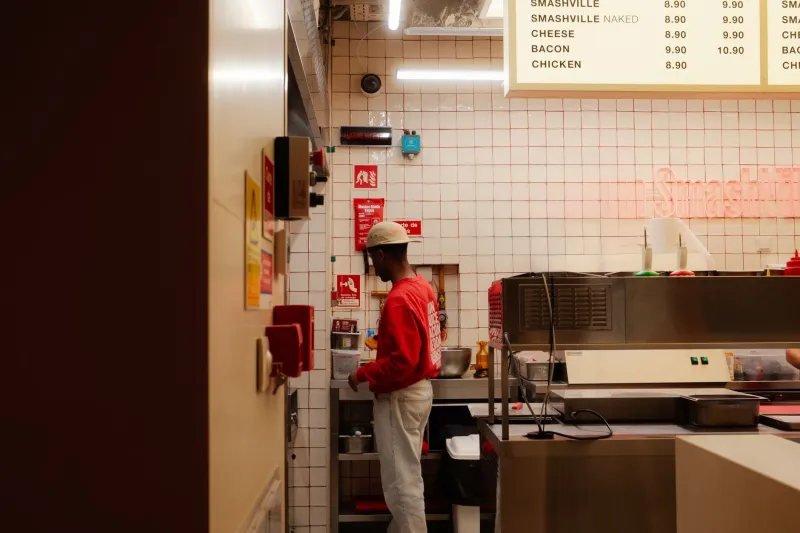
There's a version of the American burger story that everyone already knows: the Golden Arches, the Whopper, the In-N-Out cult, Shake Shack going public. It's a familiar narrative, and it ends more or less where it began — with a burger in a bag, eaten in a car or over a tray, somewhere between forgettable and fine.
But there's another story happening right now, in mid-sized cities and regional markets across the country, and it doesn't get nearly the coverage it deserves. A wave of fast-casual burger concepts has quietly built something genuinely interesting in the gap between quick-service convenience and restaurant-level ambition. These spots aren't trying to be the next Five Guys, and they're definitely not auditioning for a Michelin star. They've found a third lane — and they're moving fast in it.
What "Fast Casual" Actually Means in 2024
The term gets thrown around loosely, but for burgers specifically, the fast-casual tier has historically meant a step up from McDonald's pricing with a slightly better bun. That's been the ceiling for a long time. What's shifted recently is the floor.
The newer regional players entering this space aren't just offering a thicker patty and calling it a day. They're rethinking sourcing from the ground up — working with local ranchers, specifying grass-fed or grain-finished beef by name, and building menus around regional flavor identities rather than lowest-common-denominator crowd appeal. The result is a burger that actually has a sense of place, which sounds like a small thing until you eat one and realize how rare it actually is.
Take what's been happening in the Mountain West. A handful of concepts in Colorado, Utah, and Montana have started centering their entire identity around regional beef programs — partnerships with specific ranches, rotating cuts based on seasonal availability, and transparent labeling about where the animal was raised. That's not fine-dining posturing. That's a real operational commitment, built into a format where you're still ordering at a counter and getting your food in under ten minutes.
The Affordability Equation
Here's where the skeptic in you is probably raising a hand. Local beef, sustainable sourcing, creative menus — that all sounds like it comes with a $22 price tag attached.
Sometimes it does. But the more interesting operators in this space have figured out how to thread the needle. The key, according to several of these concepts, is volume discipline and menu focus. Rather than offering fifteen burger configurations and a sprawling sides menu, the strongest regional fast-casuals tend to run tight lineups — four to six burgers, done with real intention, supported by sourcing relationships that create pricing stability over time.
You're typically looking at $10 to $16 for a burger at these spots, depending on the market. That's more than a value menu, obviously, but it's also well below what a sit-down restaurant charges for the same quality of beef. For a lot of Americans, that's a trade they're increasingly willing to make — especially when the burger is actually memorable.
Flavor Profiles That Actually Reflect Where You Are
One of the most compelling things about this regional fast-casual movement is how deliberately these concepts are leaning into local identity. Not in a gimmicky, "we put green chile on it and called it Southwestern" kind of way, but in a more considered sense of what people in a given region actually want from a burger.
In the Carolinas, that might mean a house-made comeback sauce and a patty sourced from a nearby heritage breed operation. In the Pacific Northwest, it looks like a smash burger topped with foraged mushrooms and a sharp aged cheddar from a local dairy. In Texas, some of the more interesting newer concepts are playing with brisket blends and house-rendered tallow — nods to the state's barbecue culture that don't feel forced because they're genuinely rooted in the regional food tradition.
This isn't fusion for the sake of it. It's a burger that could only exist in the place where it was made, which is a quality that the big national chains — by their very nature — can never replicate.
Why the Big Players Are Paying Attention
If you've noticed that some of the larger QSR and fast-casual chains have been making noise about local sourcing, menu transparency, and "chef-inspired" offerings over the last few years, this regional movement is a big part of why. Consumer expectations are shifting, and the companies tracking those shifts can see where the momentum is coming from.
The regional fast-casual burger segment has become a kind of real-world testing ground for what the next generation of burger consumers actually wants. Younger diners especially — the ones who grew up reading ingredient labels and caring about supply chain ethics — are demonstrating real loyalty to the concepts that take those values seriously. And loyalty, in the restaurant business, is the only currency that actually matters long-term.
That said, there's a meaningful difference between a regional operator that has built sourcing relationships over years and a national chain that slaps "locally inspired" on a menu insert. Consumers are getting better at spotting the gap. The authenticity of the regional players is part of what makes them genuinely disruptive, and it's not something that scales easily.
The Road Ahead for Regional Fast Casual
Not every concept in this space is going to make it. The economics of running a quality-focused burger operation are genuinely difficult, and plenty of ambitious regional spots have discovered that good intentions don't always survive a rough lease renewal or a supply chain disruption.
But the ones that are making it — and there are more of them every year — are building something that feels durable. They've found an audience that's hungry for exactly what they're offering: a burger that's better than fast food, cheaper than a restaurant, and honest about where it came from. That's not a small thing. That's a real shift in what the American burger can be.
The renaissance isn't coming. For a lot of people in a lot of cities, it's already here — you just have to know where to look.