Still Got the Neon On: How America's Drive-Ins Grew Up Without Selling Out
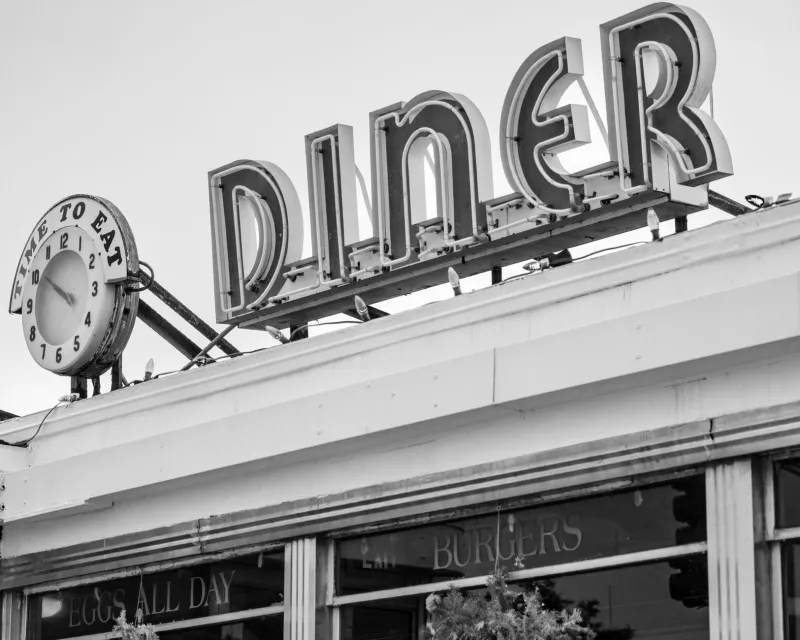
There's a particular kind of place that food critics love to discover but struggle to explain. It's got a handwritten menu board, a parking lot that's seen better days, and a speaker system that crackles when the wind picks up. The patties are fresh-ground. The cheese is applied with genuine intention. And somehow, without a single Instagram-bait interior design choice or a prix fixe tasting menu in sight, it has landed on regional best-of lists two years running.
Welcome to the quiet revolution happening at America's drive-ins.
This isn't the story of a greasy relic getting a facelift. It's something more interesting than that — a story about places that figured out how to evolve on their own terms, improving the food without abandoning the soul. And honestly, it's one of the more compelling developments in American burger culture that almost nobody is talking about.
What "Elevated" Actually Means at a Drive-In
Let's be clear about something first. When we say certain drive-ins have elevated their craft, we're not talking about truffle aioli. We're not talking about brioche buns sourced from an artisan bakery in Brooklyn, or beef that comes with a certificate of origin and a farmer's first name attached. Those things exist, and they have their place, but that's not this story.
At the drive-ins worth paying attention to, elevation looks a lot more humble. It looks like a family-owned spot in Tulsa that started sourcing beef from a local processor twenty years ago not because it was trendy but because the owner thought it tasted better. It looks like a roadside stand outside of Knoxville that switched to smash-style patties after the cook noticed the crust was just more interesting that way. It looks like incremental, unannounced improvement — the kind that doesn't come with a press release.
That's the distinction. The drive-ins that have genuinely leveled up did so through craft decisions, not marketing decisions.
The Case of Sid's Diner, El Reno, Oklahoma
If you know anything about Oklahoma onion burgers, you know El Reno. And if you know El Reno, you've probably heard of Sid's. What's interesting about Sid's isn't that it changed — it's that it didn't, and that turned out to be the whole point.
The onion burger itself is a Depression-era invention, born from the need to stretch beef by pressing caramelized onions directly into the patty on a flat-top griddle. It's a technique that produces something genuinely different from any other burger style in the country: a thin, lacy-edged patty with onion cooked into its very structure, sweet and savory and almost impossible to replicate at home without the right setup.
Sid's still makes it that way. No modifications, no modern spin. And yet food writers who cover burgers seriously — people who've eaten their way through half the country — consistently rank it among the best burgers in America. The lesson isn't that tradition equals quality. It's that when the original method is actually excellent, protecting it is the craft decision.
Why Gimmicks Kill Drive-Ins Faster Than Competition Does
For every Sid's, there are a dozen drive-ins that tried to modernize in ways that backfired badly. The pattern is almost always the same: a second-generation owner inherits a beloved local institution, gets advice from someone who's watched too many food TV shows, and within eighteen months the menu has a $16 wagyu smash burger sitting awkwardly next to the original $5 classic. The regulars feel alienated. The new customers aren't showing up in the numbers anyone projected. The identity of the place gets blurry.
The drive-in format has a particular vulnerability here. Part of what makes these places work — what gives them their authority as burger destinations — is the sense that they've been doing this specific thing for a long time and they know exactly what they're doing. The second you introduce a bunch of new concepts that feel imported from somewhere else, you're essentially admitting that what you had wasn't good enough. Even if the new items are technically fine, you've broken the implicit contract with the customer.
The drive-ins that have managed to grow their reputation without imploding are the ones that understood this. Any changes they made were in service of the original vision, not a departure from it.
The Role of Regional Identity
Something else worth noting: the best of these places are deeply, unapologetically local. They're not trying to be a concept that could work anywhere. They're trying to be the best possible version of this specific thing in this specific place.
Take the Nuway Cafe in Wichita, Kansas — a drive-in institution since 1930 that's still serving its signature "crumbly" burger, a loose-meat style that's entirely regional and entirely unlike anything you'd find in a fast-casual chain. Or Rotier's in Nashville, which operated for decades as a sit-down lunch counter with serious drive-in energy, where the cheeseburger on French bread became a local legend not because it was trying to be different, but because it just was.
These places aren't trying to compete on a national stage. They're trying to be irreplaceable locally. And ironically, that's exactly what makes them interesting nationally.
What Serious Burger Eaters Are Actually Looking For
Here's the thing about the burger obsessive community — and we'd know, given what we do here — the people who travel hours for a specific burger aren't looking for luxury. They're looking for specificity. They want a burger that couldn't exist anywhere else, made by people who've been thinking about it for decades.
Drive-ins, at their best, deliver exactly that. The format itself enforces a kind of focus. You're not running a full kitchen with a pastry program and a cocktail menu. You're doing burgers, maybe some fries, maybe a shake. That constraint is a feature, not a limitation. It means the person behind the flat-top has made this exact patty about forty thousand times and has strong opinions about every variable.
That's the kind of expertise that actually shows up in the food.
The Bigger Picture
What the best American drive-ins have figured out — sometimes consciously, sometimes just by staying stubborn — is that there's a version of excellence that doesn't require reinvention. It requires commitment. It requires caring enough about the original thing to keep getting it right, year after year, without getting bored or distracted by whatever's happening in the wider food world.
That's not a flashy story. There's no pivot, no rebrand, no chef coming in from a Michelin-starred kitchen to reimagine the classics. There's just a flat-top griddle, some good beef, and a family that's been doing this since before most food critics were born.
And honestly? That's the most interesting burger story in America right now.