Stubbornly Simple: The Independent Burger Joints Winning by Refusing to Play Along
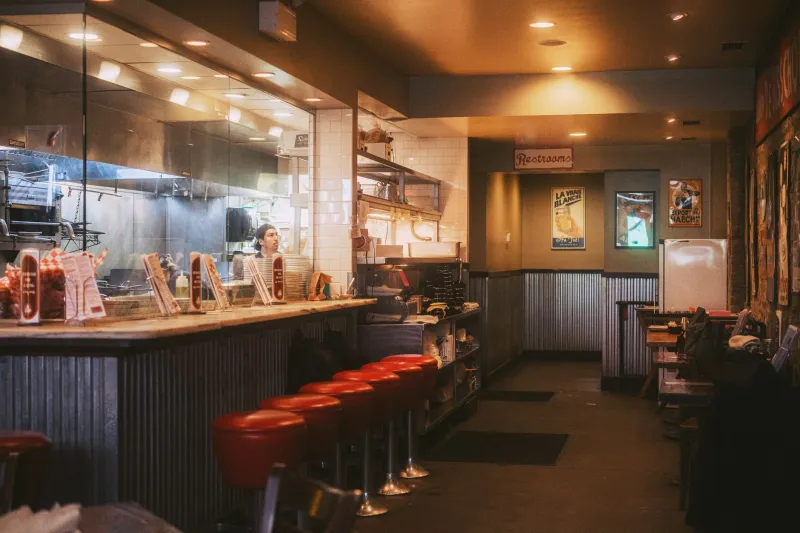
There's a playbook that most new burger spots seem to follow these days. Source your beef from a farm with a name. Stack something unexpected on top — kimchi, maybe, or a fried egg from a very specific chicken. Make the whole thing tall enough to photograph. Post it. Repeat.
And then there are places that never got that playbook, or got it and quietly used it as a coaster.
Across the country, a particular breed of independent burger joint is not only surviving the trend cycle — it's outlasting it. These aren't places stuck in amber, unaware that the food world moved on. Many of their owners know exactly what's happening out there. They've watched competitors pivot to wagyu blends and ghost kitchen spinoffs. They've been pitched on loyalty apps and QR code menus. They said no to most of it. And they're doing just fine.
The Anti-Trend as a Business Strategy
It sounds counterintuitive at first. In an industry where standing out is supposed to be everything, how does doubling down on sameness become a competitive edge?
The answer, it turns out, has a lot to do with trust.
Customers who've been eating the same double cheeseburger at the same counter for fifteen years aren't just buying a meal — they're buying the certainty of it. In a food landscape that constantly promises the next big thing, reliability becomes its own form of novelty. When a place never changes, the regulars become its most loyal evangelists. They don't just come back. They bring people.
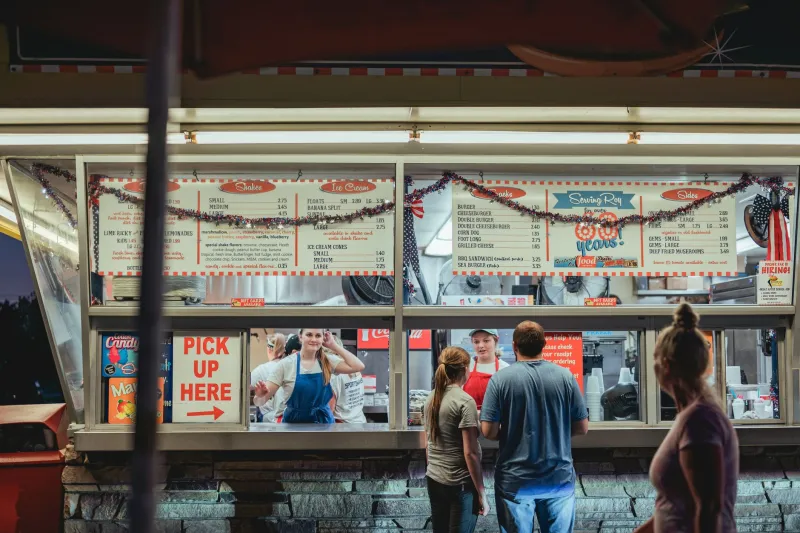
One owner of a no-frills counter-service spot in the Midwest — open since the late 1980s, still using the same griddle — put it plainly: "Every few years someone tells me I need to modernize. I ask them to look at the line out the door and tell me what exactly needs fixing."
That line, by most accounts, has been consistent for decades.
What They're Actually Rejecting
To be clear, these places aren't rejecting quality. The ones that thrive long-term are almost always doing something right with the fundamentals — fresh beef, properly seasoned, cooked on a flat-top that's been seasoned by years of use. The crust on a patty that's been pressed into a well-worn griddle is something that can't be replicated in a brand-new kitchen chasing Instagram aesthetics.
What they're rejecting is the performance of quality. The branded packaging. The ingredient origin story printed on the menu. The rotating seasonal special that exists primarily to generate content.
One burger shop owner in the Southeast, who runs a single location that's been in his family for two generations, talked about a period when he briefly tried adding a "specialty burger of the month" to keep up with what competitors were doing. "People kept asking me when we were bringing back the regular menu," he said. "The regular menu never went anywhere. But that told me everything I needed to know."
The specialty burger lasted about four months. The original menu has been there for over thirty years.
The Instagram Problem (That Isn't Actually a Problem)
One of the more interesting things about these contrarian spots is how they relate — or don't — to social media. Conventional wisdom says that in 2024, if your food isn't photogenic, you're leaving money on the table. Tall burgers. Sauce drips. Neon signs.
Except a lot of these places have a social media presence that looks like an afterthought, if it exists at all. Some have Facebook pages that haven't been updated since 2019. A few have no online presence whatsoever beyond a Yelp listing they didn't create.
And yet people find them anyway.
Word of mouth, it turns out, didn't die. It migrated. The burger spots that get passed around in local Facebook groups, Reddit threads, and "best burger in [city]" listicles aren't always the flashiest ones. Frequently they're the places someone's dad has been going to since before they were born. That kind of recommendation carries weight that a sponsored post can't replicate.
A flat, unassuming smash burger on a plain white wrapper, sitting on a plastic tray — it photographs terribly. It also gets shared constantly by people who just ate one and couldn't stop thinking about it on the drive home.
Consistency as a Skill
Here's something that doesn't get talked about enough: staying the same is genuinely hard. Not boring-hard, but operationally, logistically, philosophically hard.
Supply chains change. Ingredient costs fluctuate. Staff turns over. The temptation to tweak a recipe when beef prices spike, or to cut corners when business is slow, is real and constant. The burger joints that maintain their identity over decades are doing something that requires active discipline, not passive inertia.
Several owners described it almost like a covenant with their regulars. "These people have been coming here for years," said one owner of a beloved spot in the Pacific Northwest. "If I change the burger and they notice — and they will notice — I've broken something. That's not worth any amount of trend-chasing."
That kind of accountability to a loyal customer base functions as a different sort of quality control than any food critic or Yelp rating could provide.
What the Trend-Chasers Get Wrong
None of this is to say that innovation is bad, or that the craft burger movement hasn't produced genuinely great food. It has. But there's a meaningful difference between restaurants that evolve because they have something to say and restaurants that evolve because they're afraid of being left behind.
The latter category tends to produce menus that feel like anxiety made edible — too many options, too many concepts fighting for space, too much happening. And when the trend that inspired the pivot fades, those places are stuck with a smash burger menu they added in 2021 and a birria dip station that made sense for about eight months.
The contrarian spots don't have that problem. Their identity is fixed. Which means their energy goes into execution rather than reinvention.
The Long Game
What's striking, when you spend time looking at these places, is how many of them have quietly outlasted competitors who seemed like they had everything figured out. The well-funded concept with the beautiful branding that opened four locations in two years and then quietly closed all of them. The viral burger that sustained a six-month wait and then a six-month ghost.
The stubbornly simple spot on the same corner it's occupied for twenty-five years is still there. Still packed on a Tuesday night. Still serving the same burger.
In the burger world, as in most things, there's a difference between being first and being right. The joints that refuse to chase trends aren't behind the times. In a lot of cases, they're just far enough ahead to have already seen where the trend cycle ends up.
Same griddle. Same menu. Same line out the door. Turns out that's a strategy after all.