There Is No Best Burger in America, and That's the Whole Point
Every year, without fail, some outlet publishes a list. "The 25 Best Burgers in America." "The Definitive Ranking of America's Greatest Burger Joints." "We Tried 100 Burgers So You Don't Have To." The list goes up, the takes start flying, and within forty-eight hours, people in at least six states are furious.
Someone from the South is upset that a smash burger from a New York City restaurant placed above a pimento-cheese-loaded backyard classic from a decades-old roadside stand. Someone from California is baffled that a dry-aged wagyu patty didn't rank higher. Someone from the Midwest is quietly seething that their region's thin, crispy-edged diner burger—the one that's been made the same way since 1962—didn't even make the list.
Here's the thing: they're all right. And that's exactly the problem with every best-burger ranking ever published.
The Values Problem
Ranking burgers isn't like ranking, say, the fastest runners or the tallest buildings. Those have objective metrics. Burgers don't—or rather, they have too many, and Americans can't agree on which ones matter.
Consider beef sourcing. For one camp of burger enthusiasts, the quality and provenance of the beef is the whole conversation. Grass-fed, locally sourced, dry-aged, specific breed—these are the markers of a serious burger, and any list that crowns a burger made with commodity beef is, in their view, not a credible list. For another camp—often the people who grew up eating at old-school diners and drive-ins—the sourcing conversation is beside the point. What matters is the cook, the seasoning, and the decades of accumulated technique. The beef is fine. It's always been fine.
Neither of these positions is wrong. They're just operating from completely different frameworks.
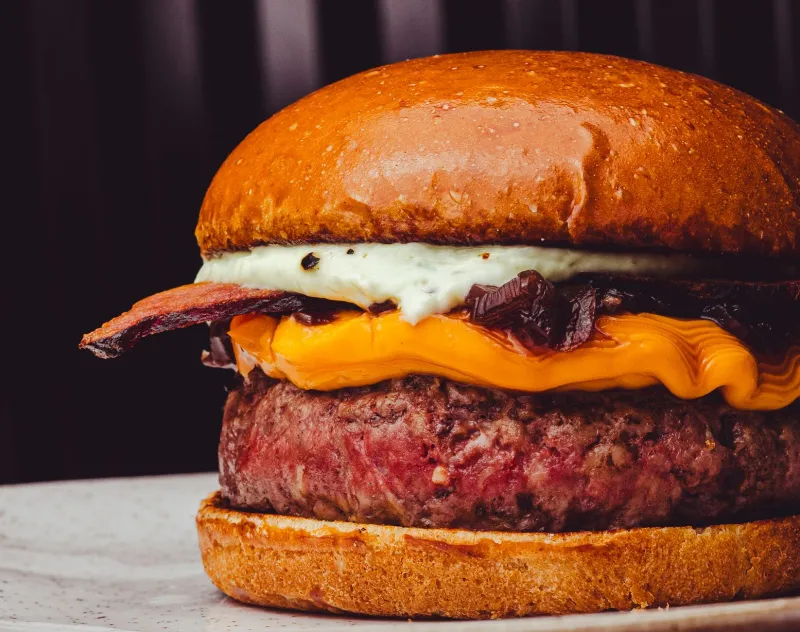
The same divide runs through almost every element of a burger. Bun preference alone could sustain a three-day argument. Brioche versus potato roll versus plain white squishy bun—each choice reflects a philosophy about the burger's texture, sweetness, structural role, and cultural context. Someone who grew up eating smash burgers on a Martin's potato roll and someone who's devoted to a thick, hand-formed patty on a toasted brioche are not, in any meaningful sense, describing the same food.
The Geography of Disagreement
American burger culture is intensely regional, and regional identity is not something people give up easily.
In Oklahoma, the onion burger—smashed with thinly sliced onions directly onto the griddle—is not a variation on a burger. It is the burger. The Loveless Cafe tradition in Nashville carries a different set of expectations than the scene at a smash-burger-focused spot in Chicago. The green chile cheeseburger that New Mexicans will defend with genuine passion is a regional artifact so specific that it barely resembles what someone in Boston would picture when they hear the word "cheeseburger."
These aren't just preference differences. They're cultural ones. When a national ranking places a $22 chef-driven burger from a major coastal city at the top of the list and a beloved regional institution somewhere in the middle, it's not just making a food judgment. It's making a statement about whose food culture counts—and a lot of Americans notice.
The best-burger list is, whether it means to be or not, a political document.
The Condiment Question Nobody Can Resolve
If you really want to understand how deep the burger disagreement runs, start with condiments.
Mustard-only purists will tell you that ketchup is for children and that anything more than mustard, onion, and pickle is a distraction from the beef. Sauce maximalists will counter that a properly constructed burger sauce—something in the Thousand Island family, or a house-made aioli, or a regional specialty—is what separates a memorable burger from a forgettable one. The no-sauce contingent argues that a great patty needs nothing. The mayo-on-both-bun-halves faction is not taking questions.
Every one of these people has a point. And every one of them would rank a list of "America's best burgers" differently based entirely on which condiment philosophy the restaurants in question subscribe to.
This isn't nitpicking. Condiment philosophy is downstream of a whole set of beliefs about what a burger is for—whether it's a vehicle for beef flavor, a textural experience, a comfort food delivery mechanism, or a canvas for culinary creativity. You can't separate the sauce from the values.
Why the Argument Is the Culture
Here's the argument we'd actually like to make: the disagreement about the best burger in America is not a problem to be solved. It's the culture itself.
No other food generates this kind of passionate, regional, identity-laden debate in quite the same way. Pizza comes close. Barbecue is arguably more intense. But the burger is uniquely democratic—it exists at every price point, in every region, in every cultural context—which means the arguments about it are uniquely broad. Everyone has a stake.
When someone from Tulsa tells you that no coastal burger list will ever understand what makes their local spot great, they're not being defensive. They're articulating something true: that greatness in a burger is inseparable from context. The diner that's been open since 1955, the counter staff who know your name, the specific smell of a flat-top griddle that's been seasoned by decades of use—none of that shows up in a ranking.
The best burger you've ever had is almost certainly the best burger you've ever had for reasons that can't be transferred to a list.
What a Real Hall of Fame Would Look Like
If we were going to build a burger hall of fame—and we're not, because we've just spent several hundred words explaining why it's a bad idea—it wouldn't be a ranking. It would be a map.
A map of the spots that have defined what a burger means to the people around them. The Oklahoma onion burger joints that haven't changed their recipe in seventy years. The New Mexico green chile spots that out-of-state visitors make pilgrimages to. The diner in the Midwest that a three-generation family visits every Sunday. The smash burger counter in a city neighborhood that became the unofficial gathering place for an entire community.
None of those places would beat each other. They'd just be different expressions of the same idea: that a burger, done right and eaten in the right place with the right people, is one of the best things America has ever produced.
The ranking was never the point. The burger was.