The Shorter the Menu, the Longer the Line: How Smart Burger Joints Win by Offering Less
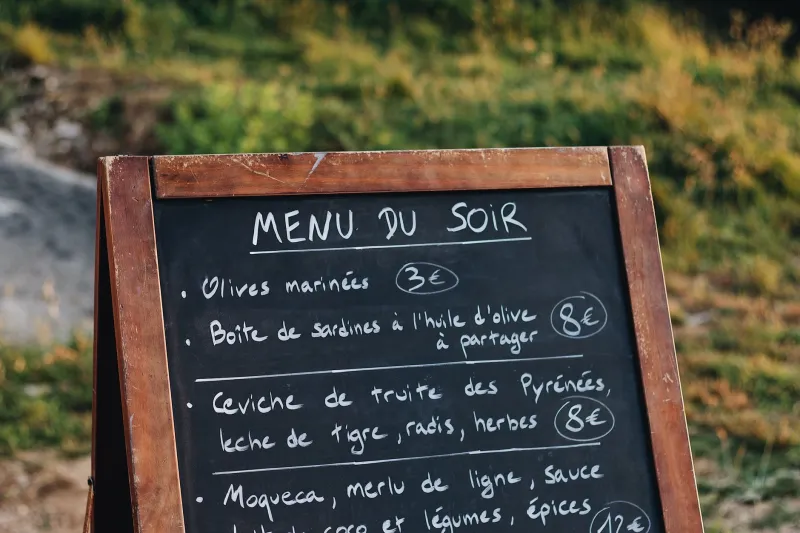
Walk into most chain restaurants and you'll find a menu that's basically a defensive document. It's designed to ensure that no customer ever leaves without finding something—anything—they're willing to eat. The result is a laminated novel of options that covers every dietary preference, daypart, and mood, and somehow manages to make the decision of what to eat feel like a small chore.
Then walk into a certain type of burger joint—the kind that's been written about in every food publication that matters, the kind with a line out the door on a Tuesday—and you'll find maybe five things on the menu. Sometimes fewer. No substitutions. No modifications. Take it or leave it.
And the line doesn't move.
Not because service is slow. Because people keep showing up.
The Counterintuitive Logic of Constraint
There's a well-documented psychological phenomenon called the paradox of choice: the more options people have, the harder it becomes to decide, and the less satisfied they tend to be with whatever they choose. It was popularized by psychologist Barry Schwartz and has since been applied to everything from retirement accounts to Netflix queues.
Burger menus are a perfect case study. When a place offers forty-seven topping combinations and a dozen patty options, the average customer spends more time second-guessing than eating. And when the food arrives, there's always the nagging sense that maybe the other thing would have been better.
Now flip that. A menu with four items communicates something completely different. It says: we've already done the thinking for you. These are the things worth eating. Trust us.
That's not arrogance—or not only arrogance. It's a promise.
When "Bad" Menu Design Is Actually Brilliant
Some burger spots don't just limit options. They actively design friction into the ordering process in ways that would horrify a traditional restaurant consultant.
Take the no-modifications rule, which a handful of high-profile burger spots have adopted and defended aggressively. On paper, this seems like a customer service disaster. In practice, it does a few things that are genuinely useful.
First, it forces the kitchen to execute one version of a thing perfectly, every time. When there are no custom orders, there are no mistakes on custom orders. Consistency becomes achievable in a way it simply isn't when every ticket is different.
Second, it shifts the power dynamic in an interesting direction. The customer isn't in charge of the experience—the kitchen is. And for a certain kind of diner, that's not a frustration. It's a relief. You're not being asked to be an expert. You're being invited to trust someone who is.
Third—and this is the part that's harder to quantify—it creates a shared experience. Everyone in line is getting more or less the same thing. There's a communal quality to that, a sense that you're all participating in something rather than each pursuing your individual preference bubble.
The Case Studies Worth Paying Attention To
This isn't theoretical. There are real burger operations that have built significant followings on the back of deliberately constrained menus.
In-N-Out Burger is the most famous example, and it's worth revisiting even though it gets talked about constantly. The official menu has four burger options. The kitchen does one thing extraordinarily well, at scale, with remarkable consistency. The secret menu exists and is widely known, but even that is tightly bounded—it's not infinite customization, it's a handful of variations on the same narrow theme. The constraint is the brand.
At the independent level, you see the same dynamic play out in smaller, more intense ways. Single-item burger spots—places that serve one burger, full stop—have appeared in cities from Portland to Nashville to Philadelphia. They're not a gimmick. They're a philosophy. Every decision about ingredients, sourcing, and technique gets concentrated into one thing, and that thing gets very, very good.
Some spots go further and design their menus to include items that seem to actively undercut their core product. A burger-focused restaurant that puts a genuinely excellent chicken sandwich on the menu isn't abandoning its identity—it's creating a comparison point that makes the burger look better by contrast. Or it's giving the "I don't really eat beef" friend a reason to come along, which means the burger person gets to come too.
What "Friction" Actually Does for Loyalty
Here's the part that really matters for understanding why this works long-term: friction creates investment.
When you have to wait in a long line, commit to a no-modification order, or make a choice from a menu that doesn't have a safety-net option, you're putting something in. You've made a real decision rather than a default one. And when the burger is good—when the constraint was clearly in service of quality—that investment pays off in a way that a frictionless experience never quite does.
Psychologists call this effort justification, and it's powerful. The harder something was to get, the more we tend to value it. A burger you waited forty minutes for and couldn't customize tastes, at least in part, like a burger you earned.
That's not manipulation. It's just how humans work. And the burger joints that understand it—consciously or not—tend to build the kind of loyalty that survives price increases, location changes, and the inevitable bad review.
The Risk Nobody Talks About
All of this comes with a real caveat. Constraint only works if the product behind it is exceptional. A limited menu at a mediocre burger spot isn't a philosophy—it's just a limited menu.
The restaurants that pull this off have usually spent years refining the thing they're asking you to trust them on. The no-modifications rule only works if the burger, as designed, is worth having without modifications. The five-item menu only works if all five items are genuinely good.
When that's true, the short menu is a feature. When it's not, it's just a complaint waiting to happen.
The best burger joints in America know the difference. And the ones that get it right are usually the ones with the longest lines.