Stop Obsessing Over the Patty. The Bun Is Where Burgers Go to Fail.
Here's an uncomfortable truth for burger obsessives: most bad burgers aren't ruined by the beef. They're ruined by what's wrapped around it.
Think about the last truly disappointing burger you ate. Maybe the patty was fine. The cheese melted properly. But somewhere around the third bite, the whole structure gave up. The bottom compressed into a dense, wet pancake. The top slid sideways. You were suddenly eating a sandwich with a fork, or worse, with your dignity.
That wasn't a patty failure. That was an architecture failure. And the architect who skipped the meeting was the bun.
The Afterthought Economy
Walk into almost any burger joint in America—especially the ones that pride themselves on their beef—and ask where the buns come from. A shocking number will point to a delivery truck. The same truck that services the diner two towns over, and the sports bar down the highway.
This is the afterthought economy in action. Restaurants will spend months dialing in a grind ratio, sourcing chuck from a specific purveyor, arguing about whether to add brisket to the blend. Then they'll drape that carefully engineered patty over a mass-produced, shelf-stable bun chosen by a distributor's sales rep.
It's like building a custom home on a foundation from a big-box store. Technically functional. Structurally embarrassing.
The economics explain part of it. Buns are cheap—often under fifty cents apiece at wholesale volume. Beef is the expensive line item, the one that shows up on the menu price. So the beef gets the attention, the beef gets the argument, and the bun gets whatever's left over.
But the greats know better.
Bread as Architecture
A bun has exactly three jobs, and every serious burger operation should be able to articulate them:
Job one: containment. A bun needs to hold together under load. We're talking about a hot, juicy patty releasing steam and fat in real time. A structurally weak bun starts breaking down the moment the patty lands. The bottom crust is your foundation—if it's too thin or too soft, you're building a burger on wet sand.
Job two: texture contrast. The best burgers offer resistance on the outside and tenderness on the inside. A toasted or griddled surface provides that initial crunch, then gives way to a pillowy interior. Skip the toast and you're eating a slightly sweet pillow. Overdo it and you've got a crouton.
Job three: flavor support, not competition. Brioche gets a lot of hate for being too rich, too sweet, too much. The criticism is fair when the bun tastes like dessert. But the pendulum swings too far the other way with bland white buns that contribute nothing. The ideal bun is a supporting actor—it knows its lines and doesn't try to steal the scene.
The Potato Roll Revolution
No bun has done more to change American burger expectations than the potato roll. The Martin's potato roll, specifically, became the unofficial bun of the smash burger movement—and for good reason.
Potato bread brings something regular enriched bread doesn't: moisture retention and a slightly denser crumb. Potato starch holds water differently than wheat starch, which means the bun stays soft longer under heat and fat. It's also got a subtle sweetness and tang that plays beautifully with a heavily seared, thin patty.
This is why so many of the smash burger spots that exploded over the last decade feel consistent—the beef matters, sure, but the potato roll is doing quiet, structural work in every bite. When a chain or an independent chooses its bun deliberately, you can taste the intention.
Toasted, Steamed, or Griddled: The Method Matters
How a bun is treated before service changes everything.
Toasting dries the cut surfaces and creates a moisture barrier—fat and Maillard browning on the cut face literally slow down sogginess. This is the standard, and it's the right call for juicy, thick patties.
Steaming—the In-N-Out approach with its soft, warm buns—goes the opposite direction. The bun becomes almost an extension of the patty, yielding completely. It works because In-N-Out's patties are thin and their toppings are crisp, providing the contrast the bun doesn't. Match a steamed bun with a juicy thick burger and you've got structural collapse.
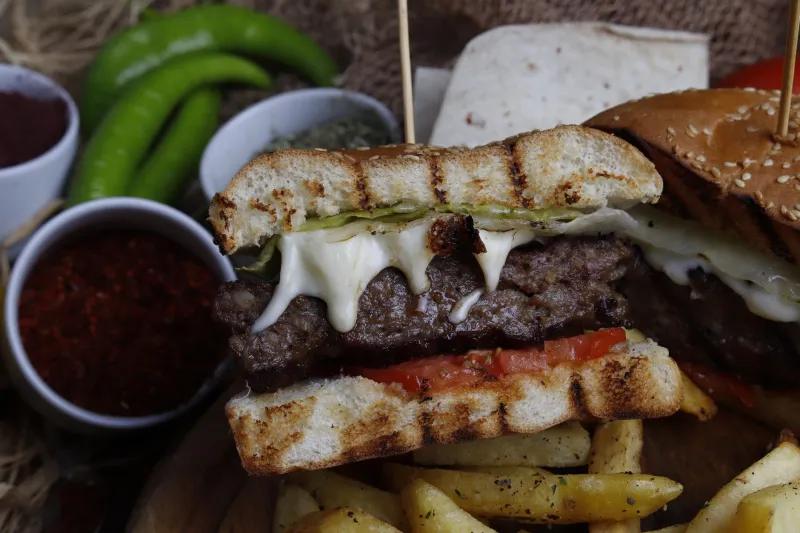
Griddling with butter or beef fat is the move for anyone serious. A buttered, pressed bun on a flat-top develops a crackly, golden surface that adds flavor and armor. It's the single cheapest upgrade a burger joint can make, and it's baffling how many skip it.
The Places That Get It
Some operations have built entire reputations on bread. The spots famous for their buns treat them like a house-made product, not a line item.
Look at the highest tier of the burger world—places where the bread program is as serious as the beef program. Buns baked in-house daily, sometimes multiple times a day. Brioche recipes tuned over years. Some fine-dining burger operations bake their buns to order, timing the bake so the bun peaks exactly when the patty does.
Even in casual settings, the bun-first philosophy shows. Certain regional drive-ins built their identities on soft, steamed buns decades before it was a technique worth naming. Their customers can't articulate why the burger tastes better—only that it does.
The Ask
So here's the challenge, whether you run a burger joint or just care about the ones you frequent: ask about the bun. Ask where it comes from, how it's stored, how it's prepared. If the answer is a shrug, that tells you everything about how the whole operation thinks.
The patty gets the glory. The cheese gets the pull shots. But the bun is the difference between a burger you eat and a burger you remember. It's time the bread got its due.