The Veggie Burger Finally Got Good—and It’s Not Asking for Your Sympathy

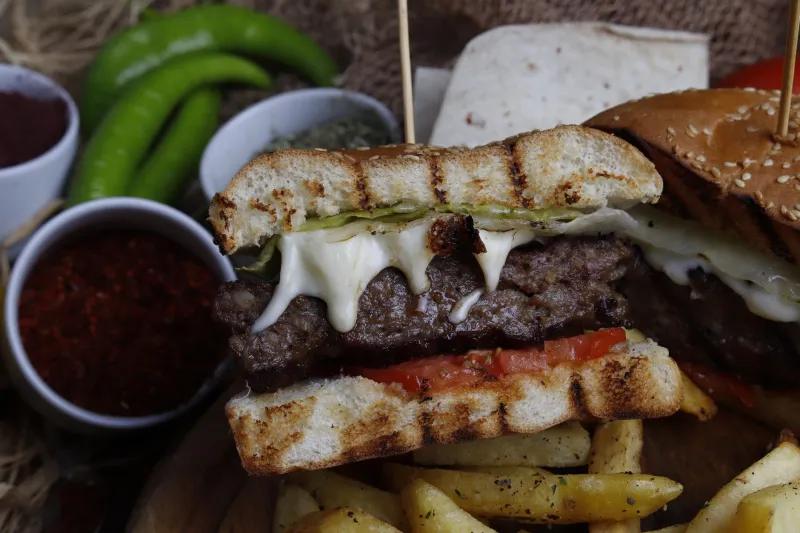
Photo: colorful gourmet veggie burger with mushroom patty and fresh toppings, via www.creativefabrica.com
For a long time, the veggie burger was the menu item that came with an apology. It was the frozen puck in the back of the freezer, the dry black bean patty that fell apart on the grill, the sad alternative that vegetarians ordered because they had no better option. In 2026, that story is out of date. The best veggie burgers are not asking for sympathy. They are asking for a napkin.
From apology to entrée
The evolution happened in stages. The first wave was the garden burger—vegetable-forward, often mushy, and usually treated as a health food. The second wave was the imitation meat era, when plant-based patties tried to mimic beef as closely as possible. Those products did a lot to move veggie burgers into the mainstream, but they also created a new problem: a veggie burger that tasted like a science experiment was still not a great burger.
The current wave is different. Chefs are treating vegetable patties as their own genre. They are building texture with mushrooms, grains, beans, and nuts. They are seasoning aggressively. They are searing hard for crust and using acid, crunch, and fat to make the burger satisfying. The menu language has changed, too. You are less likely to see a lonely vegetarian option at the bottom of the page and more likely to see a house-made veggie burger listed with the same care as the beef.
The four styles worth ordering
The mushroom-walnut burger is the umami play. Roasted mushrooms bring savory depth, walnuts add fat and crunch, and a good bun keeps it from turning into a pile. When it is done well, it tastes like a burger, not a veggie loaf.
The bean-and-grain burger is the classic comfort play. Black beans, lentils, or chickpeas provide the base, while rice, oats, or quinoa hold it together. The risk is mush. The fix is a hot skillet, a sturdy binder, and enough salt. A good bean burger with pickled onions and a sharp cheese is one of the most satisfying vegetarian sandwiches in America.
The vegetable-forward burger is the most inventive category. Smoked beet, charred corn, grated zucchini, roasted carrot, and cabbage all show up in patties that taste like vegetables instead of pretending to be beef. These burgers live or die on texture. If the patty is soft and the bun is soft, the whole thing collapses. Add slaw, crispy onions, or a crunchy pickle and it works.
The imitation plant-based burger is still around, and it is better than it used to be. It is the easiest option for a kitchen that does not want to make its own patty, and it satisfies people who want the beef experience without the beef. It is not the most interesting veggie burger on the menu, but it is no longer the worst.
What makes a veggie burger work
A great veggie burger needs fat, salt, and crust. Vegetables are mostly water, so the patty needs something to carry flavor and something to hold it together. Olive oil, butter, cheese, nuts, and seeds all help. The patty needs to be seasoned like a burger, not like a side dish. And it needs a hard sear. A veggie burger that never touches high heat will taste like a steamed dumpling.
The bun matters just as much. A soft, sweet brioche can overwhelm a delicate vegetable patty. A sturdy potato bun or a toasted whole-grain bun gives the burger structure. The toppings should add contrast: something acidic, something crunchy, something creamy. A veggie burger with lettuce, tomato, and mayo is fine. A veggie burger with pickled jalapeños, sharp cheddar, and crispy shallots is a reason to order it on purpose.
Inventive versions across the country
The Pacific Northwest leans into mushrooms, and for good reason. A mushroom-dashi burger with roasted garlic aioli and a sesame bun is the kind of thing that makes you forget you are eating a vegetarian meal. The Southwest brings chiles, corn, and cotija. A black bean burger with roasted poblano, charred corn salsa, and lime crema is a regional accent that actually works. The South has embraced pimento cheese as a veggie burger topping, which is unfair to every other topping. The Northeast has taken the falafel burger mainstream, pairing chickpea patties with tahini, pickled turnips, and a warm pita-style bun.
These are not novelty orders. They are burgers that happen to be vegetarian. That distinction matters. The best veggie burgers in 2026 are not trying to fool anyone. They are trying to be delicious.
The price and perception problem
Veggie burgers still carry a perception problem. Some customers assume they should cost less than a beef burger, even when the patty is made in-house with expensive ingredients and labor. Some restaurants price them lower to encourage orders. Others price them the same and get complaints. The truth is that a good veggie burger can cost as much to make as a good beef burger. Mushrooms, nuts, and specialty grains are not cheap. Neither is the labor to make a patty from scratch.
There is also the health halo problem. A veggie burger is not automatically a salad. It can be just as rich, messy, and calorie-dense as a beef burger. That is not a bug. It is the point. If you want a veggie burger, order a veggie burger. Do not order it because you think it is a punishment.
How to order like you mean it
Ask what the patty is made of. Ask how it is cooked. Ask what the kitchen recommends. If the server lights up when you mention the veggie burger, that is a good sign. If they grimace, order the fries and come back another day. Add cheese if you eat dairy. Add a crunchy topping. Do not default to the salad just because you are avoiding meat. The veggie burger has earned its place on the menu. Order it like it belongs there.